










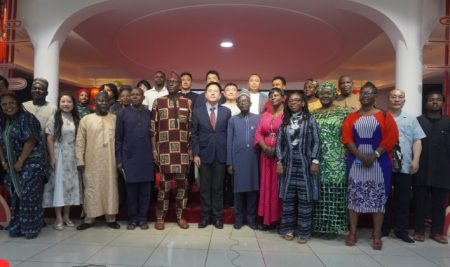
China and Nigeria have renewed their commitment to expanding cultural cooperation and strengthening people-to-people relations through a cultural heritage salon held in Abuja.
The event, themed “Maritime Silk Road Impressions: Immersive Salon of Intangible Cultural Heritage from Ancient Zayton Port,” took place at the China Cultural Centre and attracted diplomats, government officials, cultural practitioners and enthusiasts from both countries.
In his remarks, Zhou Hongyou, Minister at the Chinese Embassy in Nigeria, said tea has remained an important cultural symbol that promotes friendship and dialogue among people across different regions of the world.
He explained that Chinese tea traditions, which date back thousands of years, spread beyond Asia through the ancient Silk Road and gradually became a platform for cultural interaction and exchange among civilizations.
Zhou noted that China’s traditional tea-making practices received global recognition when they were added to UNESCO’s list of intangible cultural heritage in 2022.
According to him, the Abuja cultural salon was organised to celebrate the enduring legacy of the Maritime Silk Road, which historically connected different continents through commerce, culture and human interaction.
The diplomat also referenced the historic Chinese city of Quanzhou, known in ancient times as Zayton, describing it as one of the major centres of maritime trade and cultural exchange during the height of the Silk Road era.
He stated that beyond the exchange of goods such as silk, porcelain and spices, the Silk Road also encouraged values of cooperation, inclusiveness, peaceful coexistence and mutual learning among nations.
Zhou added that these principles continue to shape modern relations between Nigeria and China, particularly through bilateral cooperation under the Belt and Road Initiative.
Also speaking, Abdulkarim Ozi Ibrahim, Permanent Secretary of the Federal Ministry of Art, Culture, Tourism and Creative Economy, commended the organisers for using culture as a bridge to deepen ties between both countries.
Represented by Mr Envadu Yohanna Ayaka, Director of International Cultural Relations, the Permanent Secretary observed that tea culture aligns closely with Nigerian traditions that emphasise hospitality, unity and social interaction.
He further noted that the growing popularity of tea consumption in Nigeria presents opportunities for investment in tourism, agro-processing, branding and the broader creative economy.
According to him, the ministry remains committed to supporting initiatives that encourage cultural exchange, artistic innovation and international collaboration capable of boosting Nigeria’s participation in the global creative sector.
He stressed that programmes promoting intercultural dialogue are important in building stronger diplomatic and economic partnerships.
Participants were treated to a variety of traditional Chinese cultural displays, including tea ceremonies, Guqin musical performances, incense rituals and ceramic exhibitions that highlighted China’s rich artistic heritage.
Guests also participated in interactive activities designed to expose attendees to various aspects of Chinese heritage, including classical music traditions and artistic craftsmanship.
