









By Wang Yunshan, People’s Daily
Artificial intelligence (AI) is rapidly emerging as a defining force in the current wave of technological revolution and industrial transformation. As AI applications expand across industries, computing infrastructure continues to expand — and with it, the demand for electricity.
The International Energy Agency (IEA) projects that global investment in computing infrastructure will continue to grow rapidly. By 2030, electricity consumption by data centers worldwide is expected to nearly double compared to 2025 levels.
Reflecting this trend, this year’s Chinese government work report called for advancing new infrastructure projects, including hyperscale intelligent computing clusters, and promoting the coordinated development of computing capacity and electricity supply.
Why is closer integration between computing power and electricity becoming so important?
The figures tell the story.
In 2025, China’s computing centers consumed 170 billion kWh of electricity, accounting for 1.6 percent of the country’s total electricity consumption. Power demand from computing facilities at the eight national hub nodes of China’s integrated computing network has become a major driver of incremental electricity consumption, with an average annual growth rate of 39.5 percent over the past three years, far outpacing overall electricity demand growth.
“At its core, AI involves highly complex calculations on enormous volumes of data,” explained Tian Lei, director of the energy strategy center at the Energy Research Institute under the National Development and Reform Commission.
“Whether training large AI models or running inference in everyday applications, AI requires continuous large-scale computing, which depends on high-performance, high-power chips. That is the fundamental reason AI consumes so much energy,” Tian added.
Consider a single AI chip. A chip with a power rating of about 700 watts typically consumes more than 10 times the electricity of a conventional central processing unit.
“A cluster equipped with 10,000 such AI chips would require around 7 megawatts of power for the chips alone,” Tian said.
The challenge extends beyond computing hardware itself.
Running these chips continuously at high loads generates enormous amounts of heat. To ensure safe and reliable operation, computing centers require extensive cooling, ventilation, and temperature-control systems.
“Energy-saving technologies have significantly improved cooling efficiency over the years,” Tian noted. “Even so, cooling systems still account for more than 1/5 of a computing center’s total electricity consumption on average.”
Operating around the clock, a 10,000-chip AI cluster — including both the chips and supporting systems — consumes at least 200,000 kWh of electricity every day, Tian told People’s Daily.
The rapid expansion of the AI industry is expected to further drive electricity demand
China’s computing capacity continues to grow at a rapid pace. By the end of March this year, the country’s intelligent computing capacity had reached 1.882 million petaFLOPS, about 2.5 times the level recorded a year earlier. Strong growth is expected to continue.
During the 15th Five-Year Plan period (2026–2030), electricity consumption by China’s computing sector is projected to increase by more than 100 billion kWh annually, reaching 800 billion kWh by 2030, or roughly 6 percent of the country’s total electricity consumption.
AI computing facilities also require exceptionally stable electricity. Even minor fluctuations in voltage or frequency can lead to data transmission errors or equipment failures. Meeting AI’s energy needs therefore requires not only sufficient electricity supply, but also consistently high-quality power.
What advantages does China have in meeting AI’s growing electricity demand?
In terms of supply capacity, China has already built the world’s largest power supply system.
By the end of May this year, the country’s total installed power generation capacity had reached 4.01 billion kilowatts, accounting for nearly 30 percent of the global total, equivalent to about 1.7 times the combined installed capacity of the European Union and the United States.
Wang Hongzhi, head of the National Energy Administration, noted that China’s energy supply has remained stable and orderly throughout this year, demonstrating the resilience of the country’s energy system. This stability, he said, provides confidence that the system can meet the rising electricity demand driven by AI development.
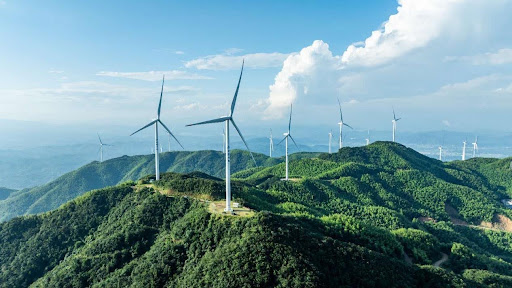
At the same time, China’s power mix is becoming increasingly greener.
By the end of May, non-fossil fuel power generation capacity accounted for 62 percent of the country’s total installed capacity, about 30 percentage points higher than in 2012.
Today, virtually all newly added electricity demand in China is being met by renewable power, reflecting steady progress in the country’s green transition.
Market mechanisms have further accelerated this shift.
In 2025, China’s cumulative green electricity trading volume reached 328.5 billion kWh, while cross-provincial and cross-regional green power transactions continued to expand. The country has also established the world’s largest green electricity certificate market, with 930 million certificates traded last year.
Newly built data centers in locations such as Horinger in north China’s Inner Mongolia autonomous region and Qingyang in northwest China’s Gansu province already source more than 80 percent of their electricity from renewable energy.
Recently, the National Energy Administration, together with other government departments released a series of policy documents, including an action plan for promoting mutual empowerment of AI and energy, which further clarify key priorities for integrating AI with the energy sector.
These policies are designed to strengthen the supply of safe, reliable and green electricity needed for AI development, while also providing stronger institutional support for deeper integration and mutual empowerment between AI and the energy industry.


China advances coordinated development of computing power and electricity amid AI boom