











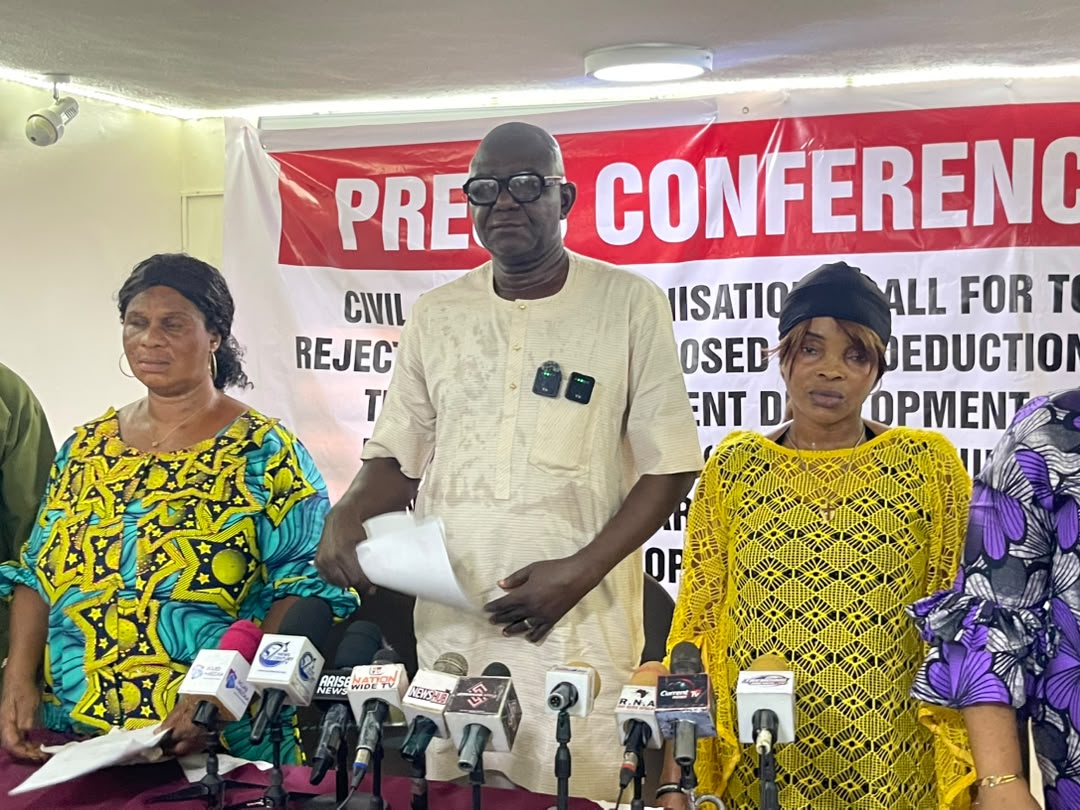
The Coalition of Civil Society Organisations in Nigeria (COCSON) has rejected a proposed 20 per cent deduction from the Nigerian Content Development and Monitoring Board (NCDMB) to finance the proposed National Research and Innovation Development Fund.
The coalition described the proposed funding arrangement as unacceptable, warning that it could undermine the development of indigenous capacity and local value addition in Nigeria’s oil and gas industry.


Speaking at a press conference in Abuja on Thursday, November 26, 2026, COCSON spokesperson, Tabuko Kennedy, said the coalition was not opposed to the establishment of a national research and innovation fund but strongly objected to the proposed funding mechanism.
Kennedy argued that funds allocated to the NCDMB were specifically meant to develop local capacity, support indigenous companies, train Nigerian engineers and promote value addition within the oil and gas sector.
He warned that diverting 20 per cent of the board’s revenue to finance another institution could weaken its ability to fulfil its statutory responsibilities.
According to him, the funds domiciled with the NCDMB are not surplus government revenue but contributions from companies operating in the oil and gas industry, specifically earmarked for local content development.
He maintained that diverting such funds without the consent of industry stakeholders would amount to a breach of trust and undermine the original purpose for which the resources were collected.
The coalition also warned that the proposed deduction could establish a dangerous precedent where financially viable government agencies would have portions of their revenues diverted to fund newly established institutions.
Kennedy questioned what would prevent similar deductions from other specialised intervention funds, including the Tertiary Education Trust Fund, the Universal Service Provision Fund and the Police Trust Fund.
He said such a practice could discourage revenue-generating agencies from improving their financial performance, create inter-agency rivalry and undermine long-term institutional planning.
COCSON further argued that the proposed deduction could violate the Nigerian Oil and Gas Industry Content Development Act, which provides the legal framework for the management and utilisation of funds accruing to the NCDMB.
The coalition maintained that the legislation did not envisage using the board’s resources to finance an unrelated research and innovation institution, describing the proposed diversion as inconsistent with the original statutory purpose of the funds.
Consequently, COCSON called on the leadership of the National Assembly, relevant committees and the Federal Executive Council to reject the proposed 20 per cent deduction.
It also appealed to President Bola Tinubu not to assent to the bill if the controversial funding provision remains in it.
The coalition disclosed that it had mobilised organised labour, pressure groups, religious organisations and other civil society groups to resist the proposed legislation.
It, however, stressed that it was not against research, innovation or the establishment of a national research funding institution, urging the government and lawmakers to explore alternative funding arrangements that would not undermine existing development agencies.
COCSON also called on Nigerians and industry stakeholders to oppose what it described as a legislative overreach, insisting that the country’s local content development programme should not be weakened to finance a new institution.
