










What the evidence says about hardship, recovery and the road ahead
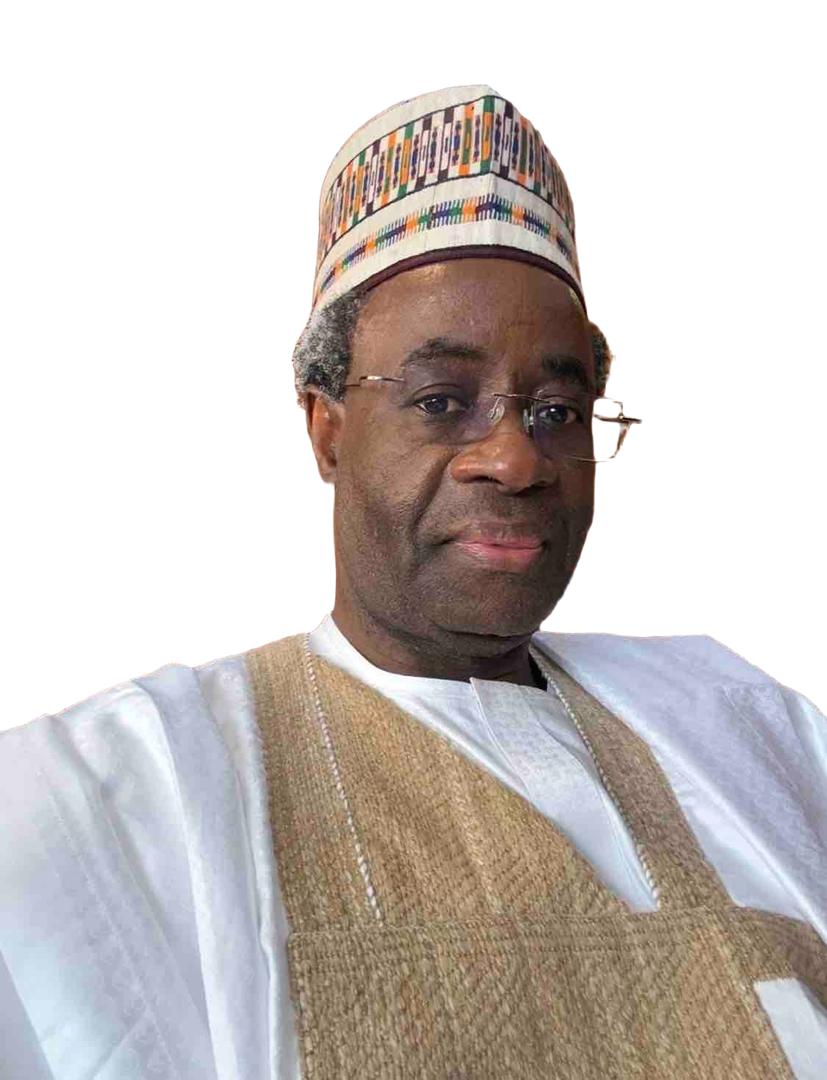
By Tanimu Yakubu, Director-General, Budget Office of the Federation
The argument should begin where Nigerians live
Any serious discussion of the reforms must begin with what Nigerians can see and feel. Food is expensive. Transport takes a larger share of income. Electricity, rent and school bills press harder on household budgets. For many families, the question is not whether an economic indicator has improved. The question is whether their money can still carry them through the month.
That hardship is real, and we should say so without hesitation. But hardship by itself does not tell us what caused it, nor does it tell us whether reversing the reforms would make the country better off. Those are separate questions, and they require evidence rather than anger or reassurance.
The PUNCH report of 16 July 2026 presents poverty as persisting ‘despite reforms’. The phrase is striking, but it compresses several different issues into one. The World Bank and IMF material cited around the same debate records both a deeply vulnerable population and an economy that has returned to stronger real growth, built larger external buffers and moved away from some of the distortions that had accumulated before 2023.[1][2][3][4] The fair reading is therefore not that hardship has vanished, nor that reform has achieved nothing. It is that economic repair has begun while household relief has lagged behind.
A poverty crisis that did not begin in 2023
Nigeria did not enter May 2023 from a position of broad prosperity. Growth per person had been weak for years. Foreign exchange was scarce. Multiple exchange rates encouraged arbitrage. Fuel subsidy costs absorbed public resources. Insecurity kept farmers away from parts of the land. Electricity remained unreliable, transport was costly and too few Nigerians held secure formal jobs.[2] Poverty and vulnerability were already widespread before the present reform programme began.
That history is important because causation matters. A poverty problem built over many years cannot reasonably be attributed in full to policies introduced three years ago. But history cannot become an alibi. The exchange-rate adjustment and fuel-subsidy removal imposed immediate costs on people who had little room to absorb them. Imported goods and inputs became more expensive. Transport costs rose. Inflation eroded wages and savings. Those consequences belong in any honest account of the reforms.
We do not strengthen our case by appearing to argue that suffering is merely inherited. We strengthen it by acknowledging that necessary reforms have had painful consequences and then showing, with evidence, how our policies are reducing those consequences.
What the 79 per cent figure does — and does not — mean
The widely quoted figure that 79 per cent of Nigerians are poor or vulnerable is serious, but it needs to be read correctly. The World Bank’s Streamlined Country Diagnostic distinguishes those already below the poverty line from those who are near-poor or vulnerable to falling below it.[1][2] The number therefore describes a broad zone of insecurity, not a single poverty headcount in which every person is in the same condition.
The distinction does not soften the warning. A household only slightly above a poverty line can be pushed below it by a failed harvest, a medical bill, the loss of a job or another rise in food prices. What the figure shows is how narrow the margin of safety is for millions of Nigerians. It should not, however, be turned into proof that the reforms created a poverty stock that plainly predates them.
The economy has not collapsed, but households are still waiting
World Bank data show real GDP growth of about 4.0 per cent in 2025. The IMF estimated the same rate for 2025 and projected about 4.1 per cent for 2026. Gross international reserves were around US$46 billion at the end of 2025, up from about US$40 billion a year earlier, while net reserves also improved.[3][4] These figures are not a substitute for household welfare, but they are evidence against the claim that the economy has simply collapsed under reform.
The fall in GDP measured in current United States dollars also needs care. A sharp depreciation of the naira reduces the dollar value of naira output even when the volume of goods and services produced is rising. World Bank data can therefore show positive real growth alongside a lower current-dollar GDP.[3] The depreciation has real costs: imported inputs become more expensive and the external value of domestic incomes falls. But it is analytically wrong to treat a translation effect as if it were an equal fall in physical production.
None of this should be presented triumphantly. Nigerians do not eat reserves. A better fiscal balance does not put rice on a table by itself. The value of stabilisation lies in what it permits next: investment, production, employment, lower inflation and better public services.
Relief will come from making more things and moving them more cheaply
The most convincing answer to hardship will not come from another speech about macroeconomic stability. It will come when the supply of food, energy, transport and industrial inputs improves enough to lower costs in everyday life. That is where several large projects now approaching important stages become relevant.
The Kano-Jigawa-Katsina-Maradi railway is one example. We reported in May 2026 that the project was about 60 per cent complete, with delivery targeted for the end of 2027.[5] Its relevance is practical. Northern farmers and traders move large volumes over long distances on roads that are expensive to maintain and slow to use. A working freight corridor can lower haulage costs, widen markets for agricultural produce and improve trade through the northern border. The benefit of the railway will not be the number of kilometres of track. It will be the saving that eventually appears in the cost of moving grain, livestock, fertiliser and manufactured goods.
Lagos shows the same principle in urban transport. The first phases of the Blue and Red Lines are already carrying passengers while extensions continue.[6] For a commuter, the value of mass transit is measured in time, predictability and the share of income spent getting to work. For business, it is measured in a city that moves people with less dependence on road congestion and fuel-intensive transport. That is how infrastructure becomes an alleviative measure rather than a monument.
The Ajaokuta-Kaduna-Kano gas pipeline can have an even wider industrial effect. NNPC’s May 2026 report placed the mainline in advanced construction, installation and pre-commissioning, with early gas delivery to Abuja targeted in 2026.[7] Northern industry has long paid heavily for unreliable energy. Gas delivered into the corridor can support power generation and manufacturing, reduce dependence on expensive self-generation and make new investment more viable. The public will judge the pipeline not by its diameter, but by the factories it helps to run, the jobs it supports and the costs it helps to bring down.
Fertiliser shows what supply reform can mean on the farm
The fertiliser story is closer to the next harvest. Under the Presidential Fertiliser Initiative, more than 449,000 metric tonnes of inputs had been secured by May 2026, and we were on course for a 1.1 million metric tonne programme – roughly 22 million bags – supported by more than 90 operational blending plants.[8]
For years, the problem was not merely the existence of blending plants. A plant without raw materials is an idle factory. Information available to us indicates that, under the previous administration, some plants could secure enough raw materials for only about three months of production. We have moved to secure raw materials on a basis intended to sustain blending through the year. That change is important because it turns installed capacity into actual supply.
The difference is easy to understand. A plant that works for three months produces little and carries high unit costs. A plant supplied through the year can produce more, spread its costs over a larger volume and compete in a market with less scarcity. As availability rises, scarcity pricing becomes harder to sustain. Farmers gain better access to fertiliser when they need it, yields can improve, and the resulting increase in food supply should place downward pressure on prices in 2027.
The effect will not occur by proclamation. Fertiliser must reach farmers, crops must be planted, fields must be secured, harvests must be moved and markets must remain competitive. But this is a visible chain of cause and effect, and it is a stronger basis for expecting lower food prices than administrative price controls.
Rice mills: feed the mills, not the import market
The same supply argument applies to rice. About 300 rice mills are struggling, not because Nigeria lacks milling capacity, but because too many of them cannot obtain enough paddy to run steadily. When a mill operates below capacity, workers lose shifts, fixed costs are spread over fewer tonnes, farmers lose a dependable buyer and the price advantage of domestic processing is weakened. Importing finished parboiled rice may appear to close a supply gap quickly, but it also transfers the milling, transport, handling and much of the value added to producers outside Nigeria.
Our intervention should therefore address the shortage at its source. We need to stimulate local paddy production while permitting the importation of the raw-material shortfall where domestic supply is temporarily inadequate. The purpose of such imports would be to keep Nigerian mills running, not to displace them. As local output rises, the imported component should fall. That approach protects consumers from scarcity while preserving demand for Nigerian paddy and creating a stronger incentive for farmers to expand production.
For rural households, this distinction is consequential. A bag of finished rice imported into Nigeria creates little income for a farmer in Kebbi, Kano, Jigawa, Niger, Taraba or Ebonyi. Paddy supplied to a Nigerian mill does. It supports cultivation, aggregation, haulage, milling, packaging and distribution before the rice reaches the market. Keeping the roughly 300 mills supplied therefore attacks food scarcity and rural poverty at the same time. It raises domestic value added, strengthens the market available to farmers and retains more of every naira spent on rice within the Nigerian economy.
The objective is not permanent dependence on imported paddy. It is to prevent idle domestic capacity while we close the production gap. The durable answer remains higher yields, more irrigated cultivation, improved seed, fertiliser, extension services, secure farming communities and reliable links between growers and mills. But where a temporary shortfall exists, importing the missing raw material is economically preferable to importing the finished product and leaving Nigerian factories underused.
Security is also an economic policy
A farmer who cannot enter his field does not produce. A trader who fears the road moves less produce and charges more for risk. In this sense, the campaign against banditry is also a campaign against food inflation.
Security operations in 2026 restored access to a number of communities and allowed economic activity to resume in areas that had been badly disrupted.[10] It would be inaccurate to claim that banditry has disappeared from every affected area. The economic test is narrower and measurable: are more farmers returning to their land, are more hectares being cultivated, and is more produce reaching markets with fewer losses and delays?
Where the answer is yes, the effect should combine with better fertiliser availability. More cultivated land, higher input use and safer distribution can produce a larger harvest. If those gains hold through the 2026 farming cycle, consumers should begin to see more relief in food markets in 2027.
Why the alternative also has a cost
It is easy to compare the pain of reform with an imagined version of the old system in which prices stayed low and no one paid the difference. That system did not exist. The difference appeared elsewhere: in subsidy bills, foreign-exchange shortages, parallel-market premiums, arrears, inflation and public resources that could not be spent on other needs.
The real choice is not between painful reform and painless continuity. It is between completing a difficult correction and returning to arrangements that had become increasingly expensive to finance and easier to exploit. That does not excuse poor implementation. It means that the answer to hardship is to improve the reform, protect vulnerable households and accelerate the supply response, not to rebuild the distortions that made correction unavoidable.
The test now is whether Nigerians can feel the change
We should not ask Nigerians to celebrate numbers they cannot yet feel. Our better argument is to show where the numbers lead. Stronger public finances must produce roads, power, schools, health care and productive investment. Better reserves and a more orderly foreign-exchange market must support confidence, investment and a more stable supply of essential goods. The reforms will be vindicated in the lives of Nigerians, not in the vocabulary used to describe them.
These are not slogans. They are outcomes that can be checked. If fertiliser remains scarce despite year-round input supply, then our policy has not worked as intended. If rice mills remain idle for lack of paddy while finished parboiled rice is imported, we will have missed an opportunity to reduce scarcity through Nigerian production and rural incomes. If secured communities do not return to cultivation, the economic benefit has not been realised. If new rail and gas infrastructure do not reduce costs or expand productive activity, completion alone will not be enough. We must therefore measure success by what these interventions do to production, prices, jobs and household welfare.
Nigeria’s poverty crisis is older than the present reforms. Our reforms have nevertheless imposed real costs on households that were already under strain. Both facts can be true at the same time. The evidence also shows that real output has grown, external buffers have improved and important constraints on production are being addressed. Our responsibility now is to convert those gains into relief that is visible in markets, incomes and public services.
That is where the debate should end and our work should begin: not with a claim that hardship has disappeared, and not with the claim that reform has failed because hardship persists, but with a clear test. Are we producing more? Are we keeping our fertiliser plants and rice mills working? Are we moving goods more cheaply? Are farmers returning to their fields? Are factories operating for longer? Are families beginning to see prices ease and opportunities expand? Those are the questions by which Nigerians will judge us, and rightly so.
References
1. Sami Tunji, “Poverty threatens 79% of Nigerians despite reforms – World Bank,” PUNCH, 16 July 2026.
2. World Bank, Nigeria Country Partnership Framework FY2026–FY2032 and accompanying Streamlined Country Diagnostic, 2026.
3. World Bank, World Development Indicators, Nigeria country data, including 2025 current-dollar GDP and real GDP growth; accessed August 2026.
4. International Monetary Fund, Nigeria: 2026 Article IV Consultation — Press Release; Staff Report; and Statement by the Executive Director for Nigeria, IMF Country Report No. 26/125, June 2026.
5. State House, Abuja, “FG: Kano-Jigawa-Katsina to Maradi Railway Project 60 Percent Completed; Set for Delivery End of 2027,” 3 May 2026.
6. Lagos State Government, official updates on Lagos Rail Mass Transit Blue and Red Lines, including operational Phase I services; 2024–2025.
7. NNPC Limited, Monthly Report Summary, May 2026: AKK mainline construction, installation and pre-commissioning activities, with early gas delivery to Abuja targeted in 2026.
8. State House, Abuja, “President Tinubu Hails MOFI, NADF for Strengthening Nigeria’s Fertiliser Value Chain, Supporting Food Security,” 18 June 2026.
9. Ministry of Finance Incorporated / PFI-NPK reporting on early 2026 procurement and distribution of fertiliser raw materials to registered blending plants, June 2026.
10. Official security reporting on continuing operations against banditry and kidnapping and the restoration of access to affected communities, 2025–2026.


POVERTY, REFORM AND THE PROBLEM OF CAUSATION