










By Lyu Shao, People’s Daily
Located in Shenzhen, south China’s Guangdong province, the Apollo Future Industry City spans about 50 square kilometers. The industrial park appears neat and uncluttered, with no tangled underground utility lines or dense overhead cables. So where are the city’s utility lines?
Deep beneath the heart of the industrial park runs a comprehensive utility tunnel about 5.6 kilometers long. It houses electricity, telecommunications, gas, water supply, sewage, and other municipal utility lines.
Wearing a safety helmet, Zhang Gelei, the project’s installation manager, walked into the underground tunnel. The passage is well lit and properly ventilated. Together with his colleagues, he carefully inspected the tunnel structure and drainage system to ensure everything was ready for the rainy season.
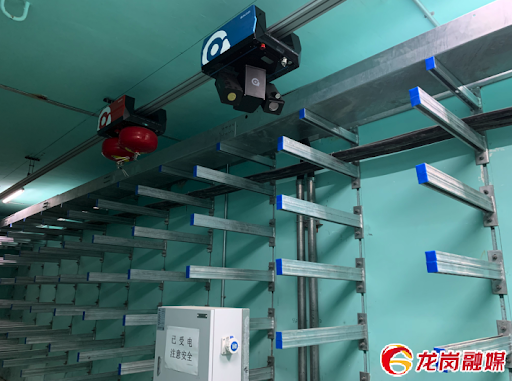
The Apollo project is one of China’s largest comprehensive utility tunnel projects in terms of cross-sectional area, number of compartments, and variety of utility lines accommodated. It functions much like a well-organized “apartment building,” with separate compartments for rainwater, sewage, gas, general utilities, power and telecommunications, and high-voltage power.
Concrete walls separate the compartments, keeping them independent while allowing them to work together efficiently. The gas compartment is equipped with explosion-proof electrical equipment and an independent ventilation system. The sewage compartment has its own wastewater and odor-control systems. Water supply and reclaimed water pipelines run along opposite sides of the same compartment, each following its designated route.
“By making intensive use of underground space, we have freed up valuable land resources for high-end industries to settle in the industrial park,” said Xi Chunhuai, general manager of Shenzhen Longgang Information Way Limited Company. The utility tunnel is divided into separate compartments based on the different safety requirements and is located beneath green belts, minimizing the impact of routine operation and maintenance on traffic and municipal services.
Under the traditional method of burying utility lines directly underground, different lines are planned and built separately. Whenever a problem occurs, roads have to be dug up repeatedly, disrupting traffic and daily life while undermining the business environment.
“Utility lines buried directly in the ground are exposed to soil and groundwater, making them more vulnerable to corrosion and shortening their service life. This also increases management risks and operation and maintenance costs,” said Liu Pengfei, chief engineer of the Apollo project at China MCC20 Group Co., Ltd.
Now, all utility lines in the industrial park are housed in the tunnel under unified planning, construction, and management. When a fault occurs, workers can enter through personnel access points and carry out repairs inside the tunnel without closing roads, putting up barriers, or disturbing residents. New utility lines can also be installed inside the tunnel without having to dig up roads.
Inside the general utility compartment, an inspection robot moves slowly along a rail mounted near the ceiling. Equipped with infrared cameras and various sensors, it can monitor the tunnel structure, utility lines, and environmental conditions in real time. A firefighting robot stands ready at all times, automatically heading to the affected area for rapid response if flames or abnormal temperature rises are detected.
Back above ground, a large screen at the project’s monitoring center displays real-time data on temperature, humidity, oxygen levels and fire hazards, while providing intelligent alerts. This not only frees workers from labor-intensive manual inspections but also significantly enhances the city’s resilience to extreme weather and emergencies.
“Robots working alongside human inspectors effectively address the time-consuming and labor-intensive nature of traditional inspections, as well as blind spots and safety risks, greatly improving maintenance response efficiency,” Zhang said.
The utility tunnel also incorporates innovative approaches to ecological protection and construction. The Apollo project is located in a low-lying area where heavy rain used to send torrents rushing down nearby hillsides, quickly turning low-lying areas into temporary rivers. The tunnel was therefore designed with the sponge city concept in mind. The rainwater compartment works in tandem with permeable ecological pavement, ecological storage ponds and other sponge city facilities to improve drainage and flood control.
“Since the utility tunnel went into operation in 2021, there has been no flooding here,” Liu said. The collected rainwater can be reused for municipal irrigation and road cleaning.
The tunnel currently accommodates nine types of municipal utility lines. In addition to sufficient capacity for power and telecommunications, it has also reserved space for future technologies such as 6G and computing power networks.
According to local authorities, Shenzhen’s Longgang district has launched eight comprehensive utility tunnel projects since 2016, with 60.45 kilometers of tunnels already completed. The district is continuing expanding the network’s coverage and capacity.
With forward-looking planning, high-standard design and intelligent operation and maintenance, Shenzhen is accelerating the development of a comprehensive utility tunnel network, making it an increasingly important part of the city’s municipal infrastructure.


Shenzhen strengthens urban resilience by moving utility lines underground